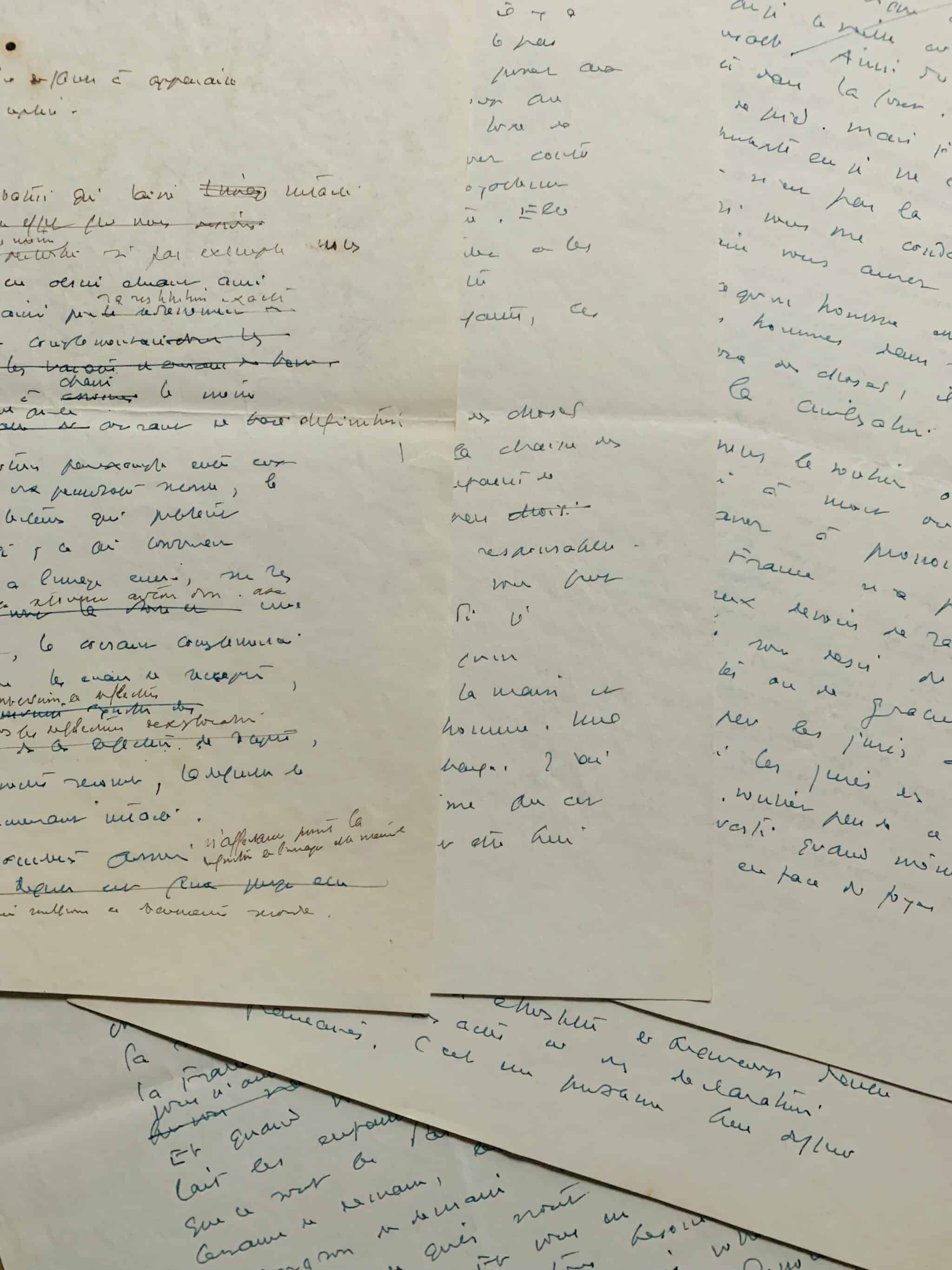
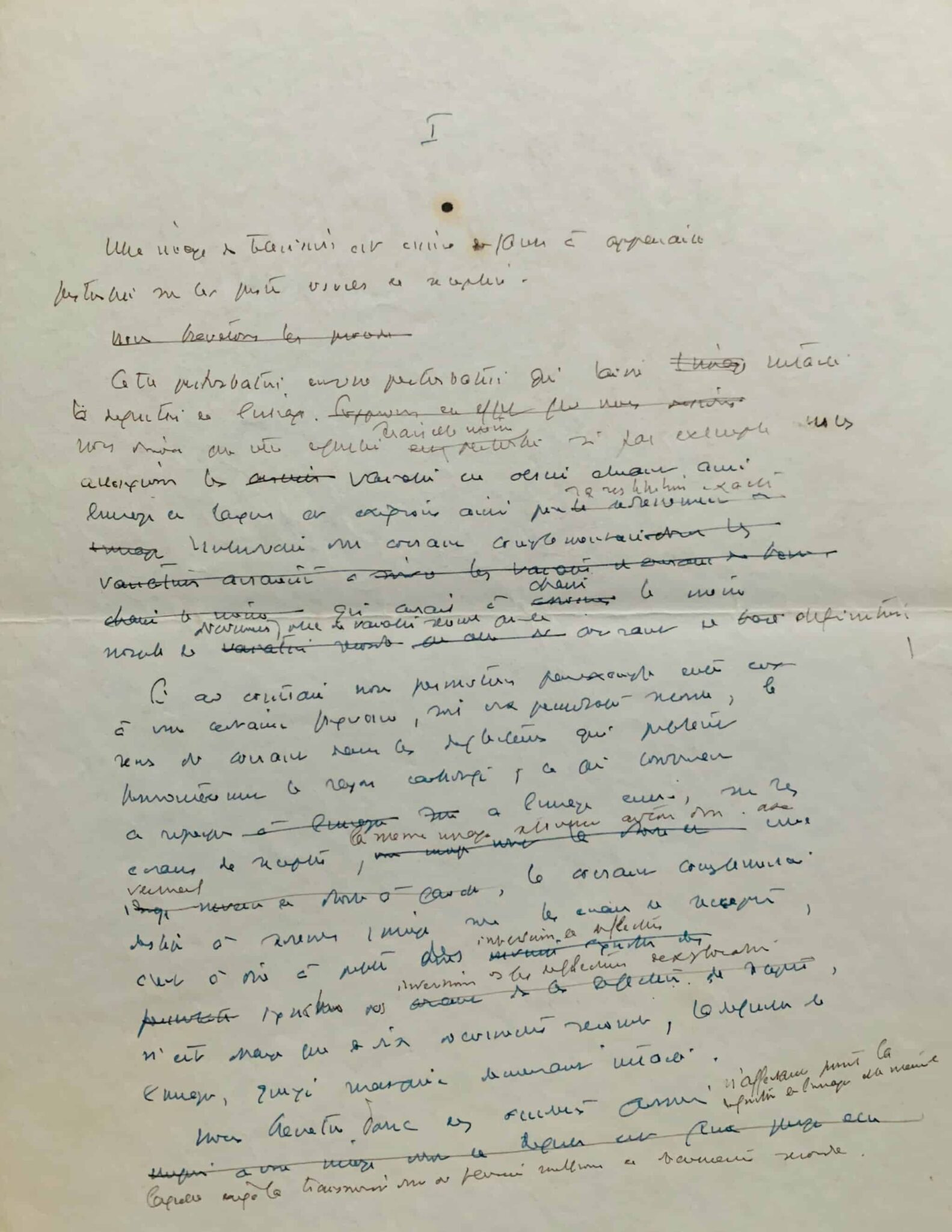
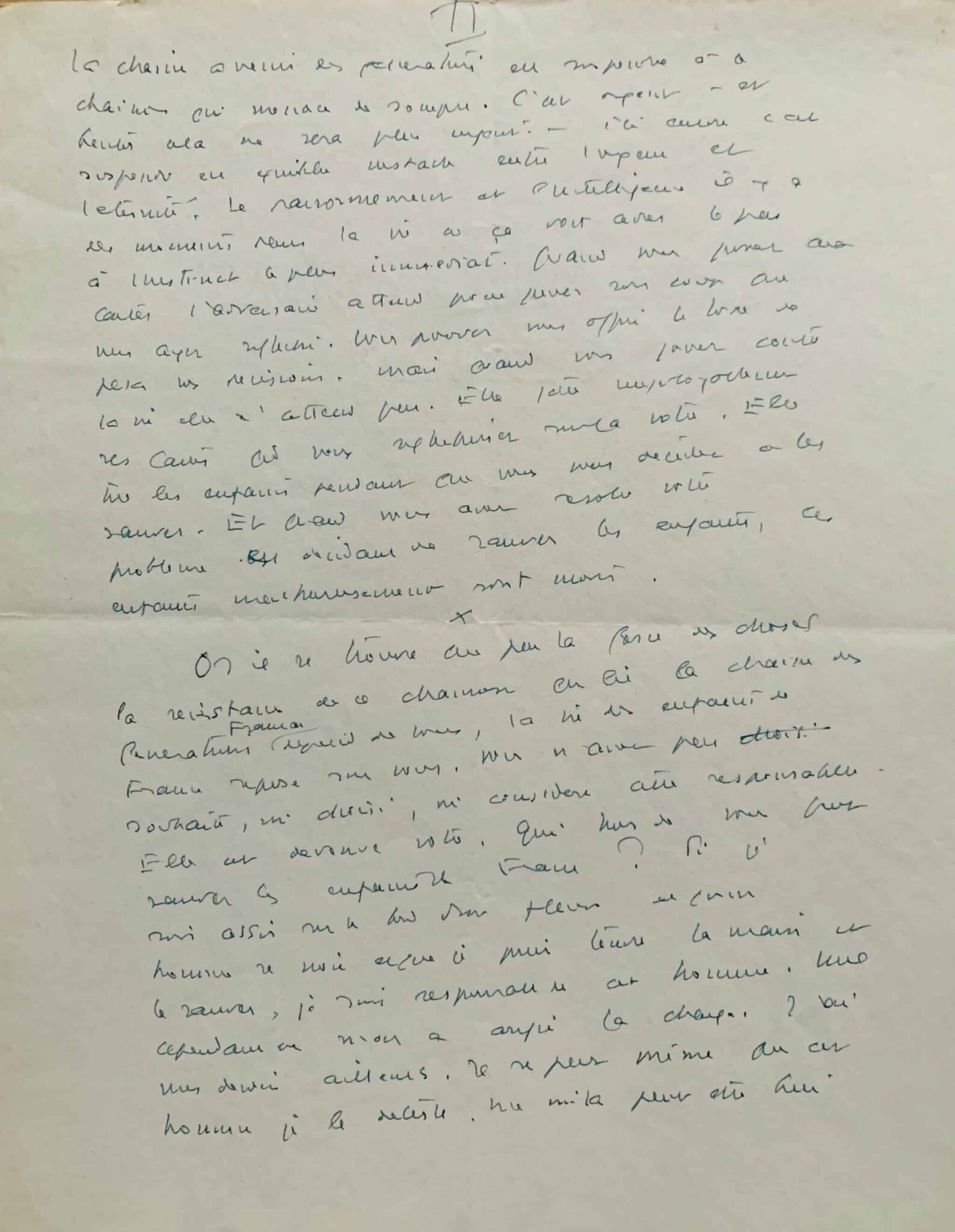
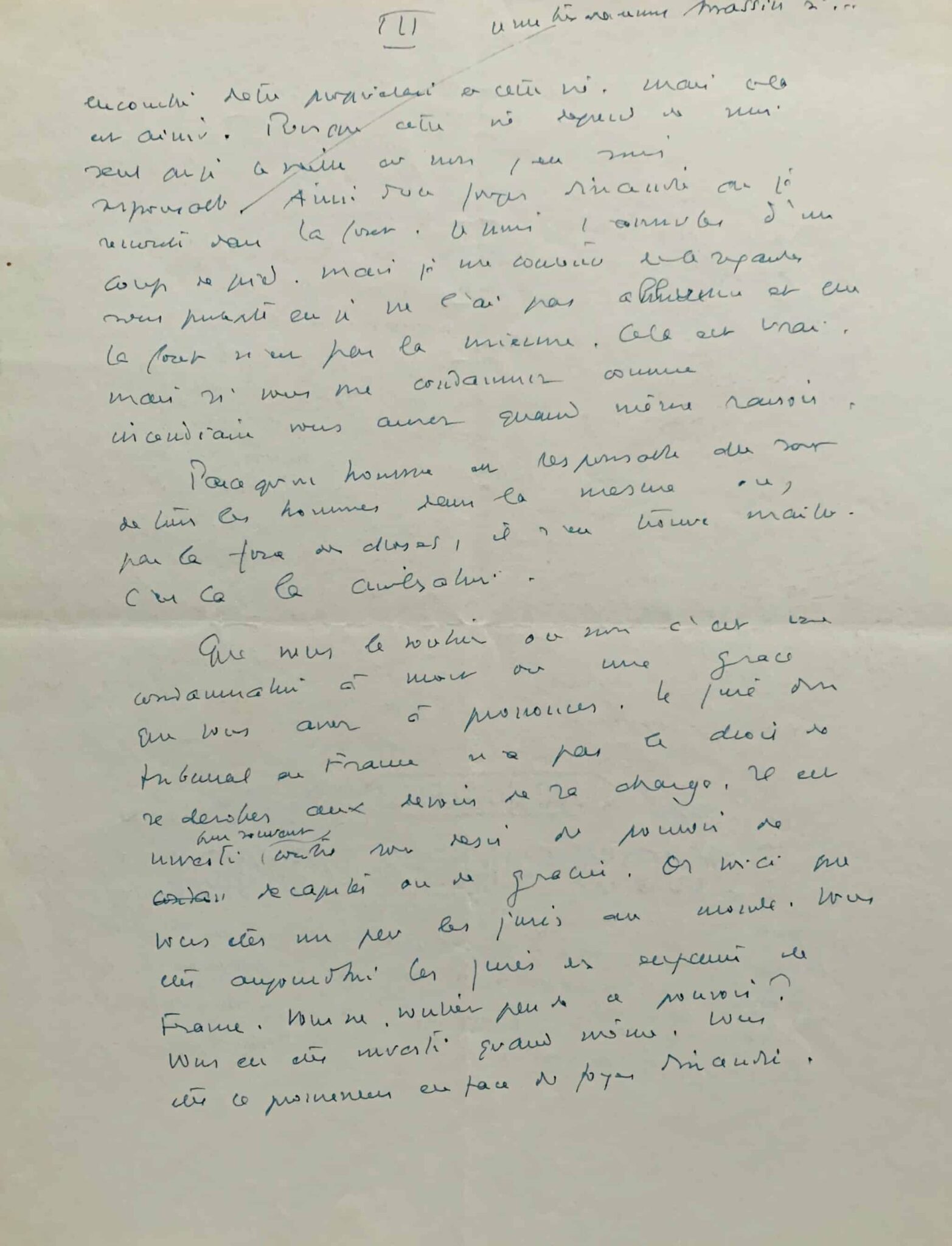
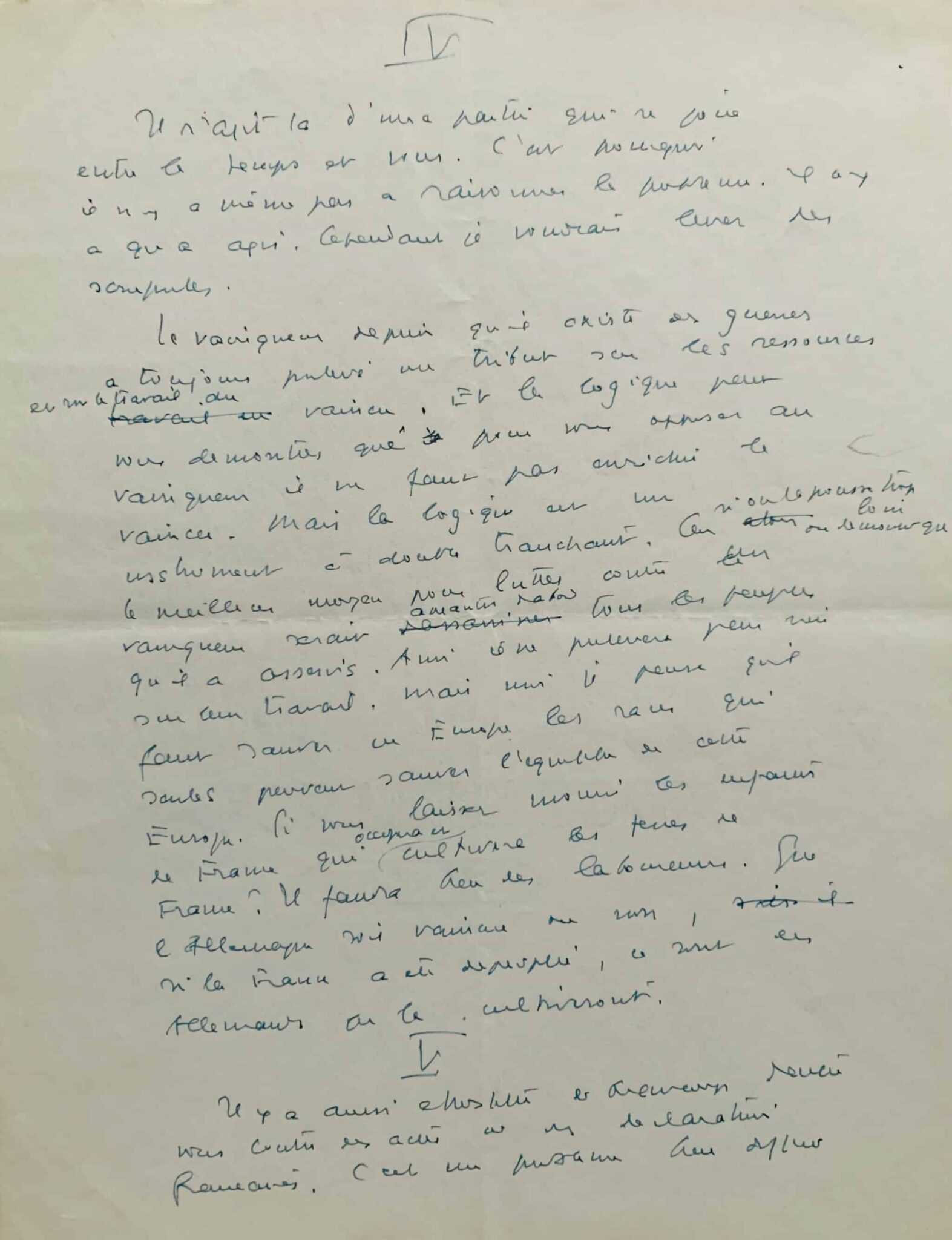
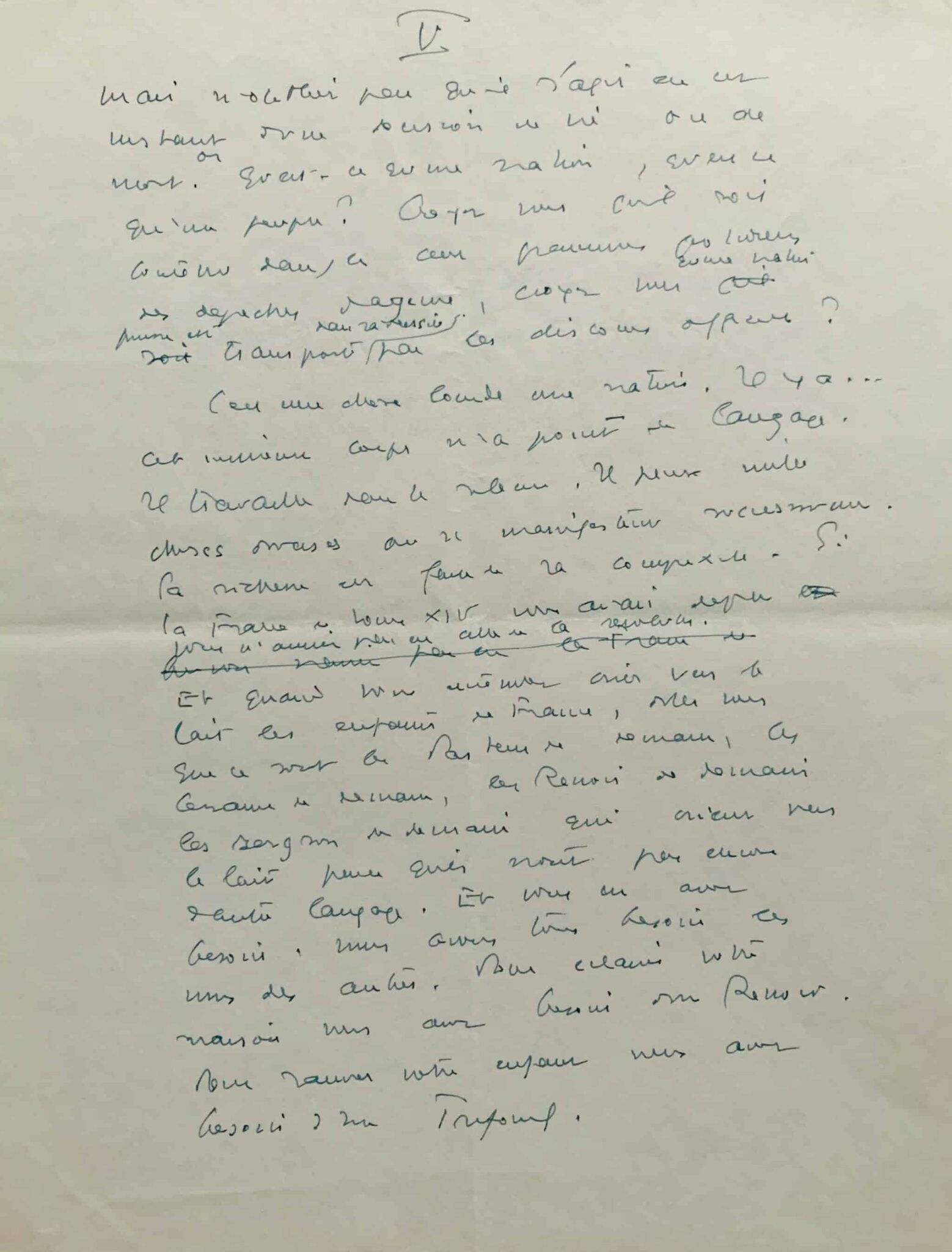
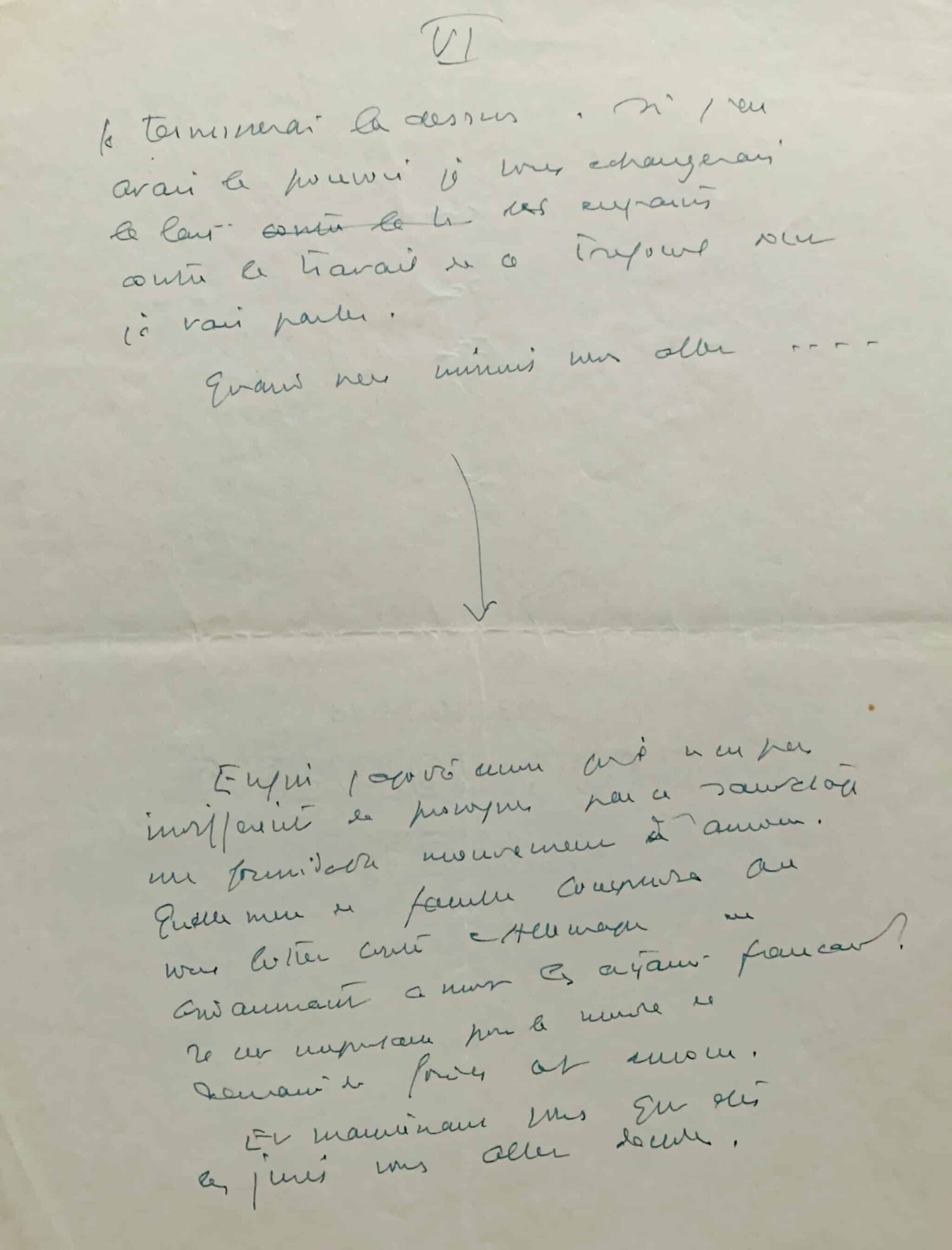
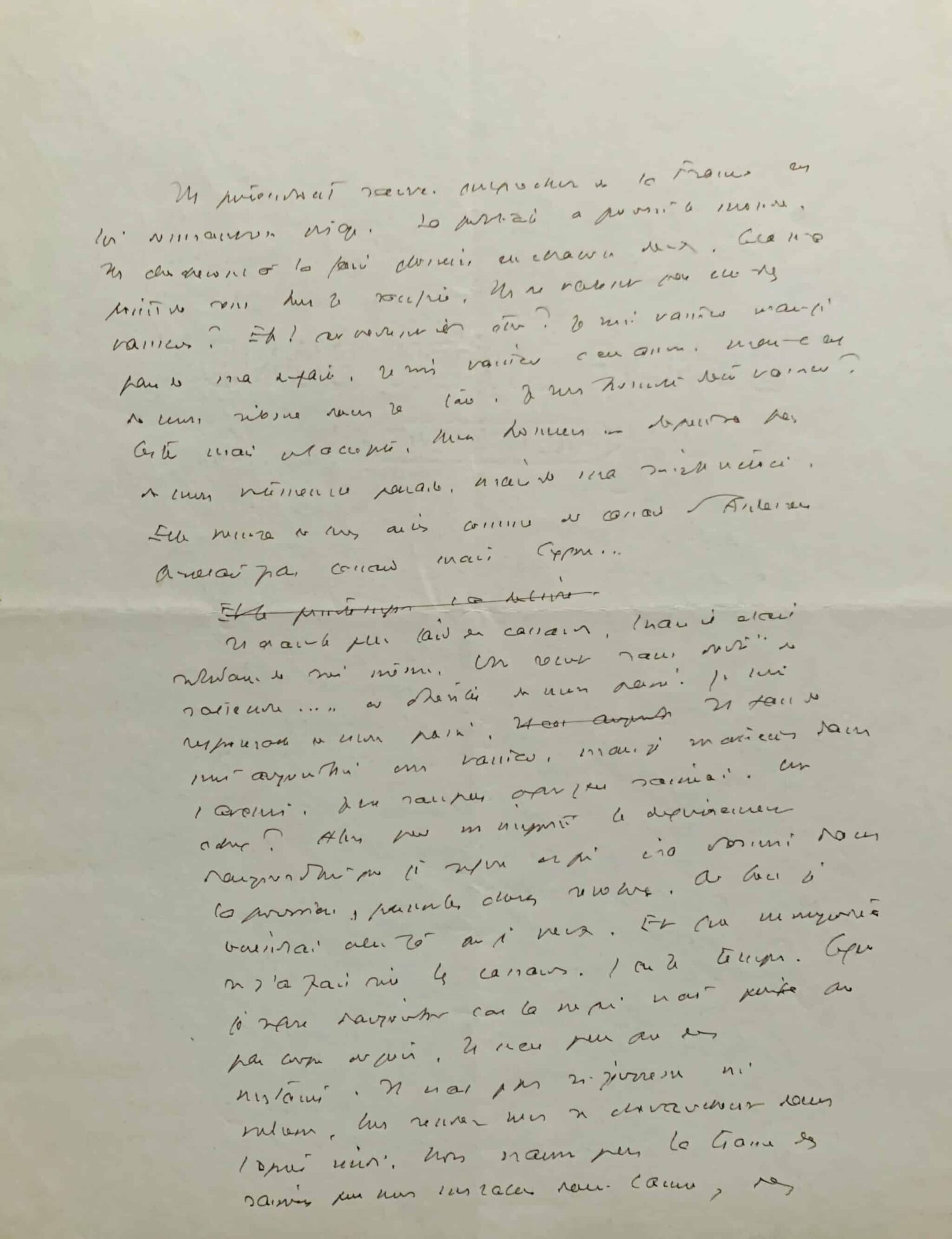
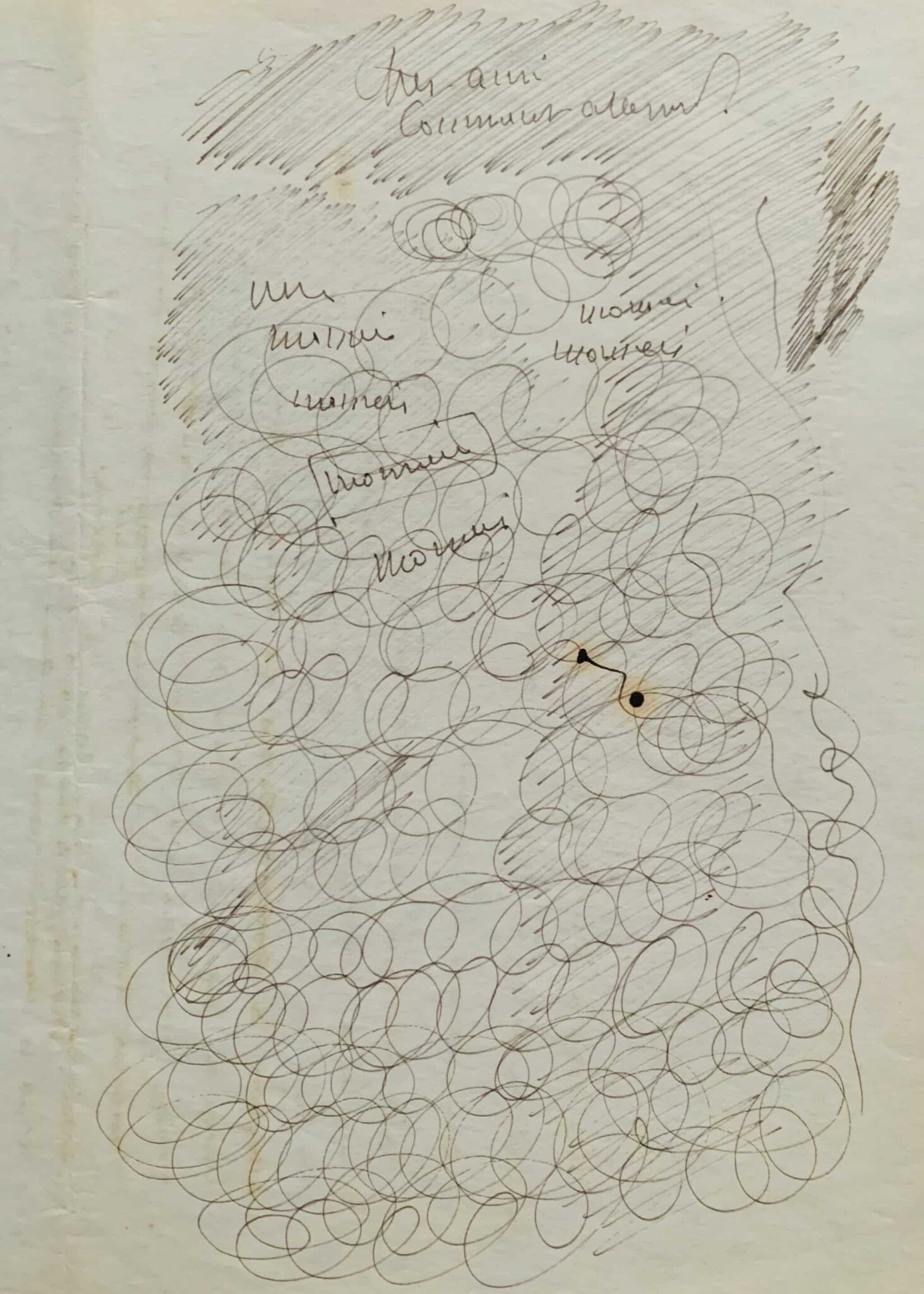
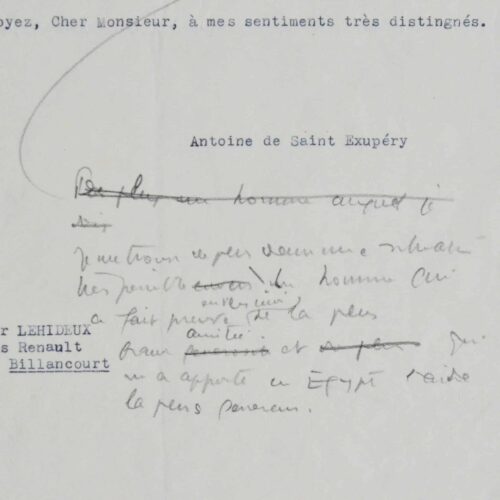
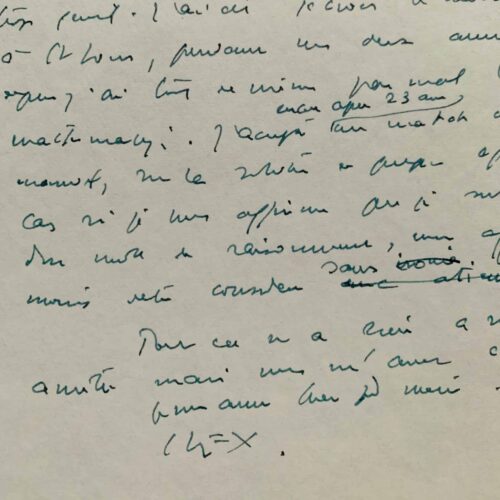
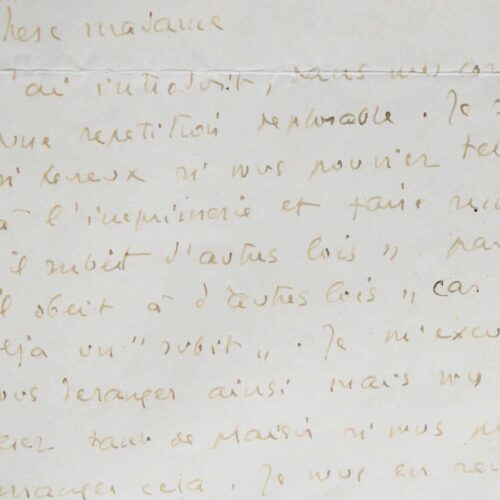
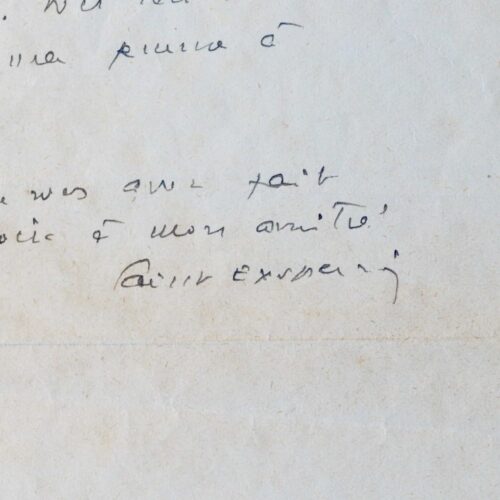
An important manuscript by Antoine de Saint-Exupéry, written during the war, and which appears to be unpublished: it is a patriotic text addressed to "those fighting against Germany," urging them to act quickly, particularly regarding the children of France.
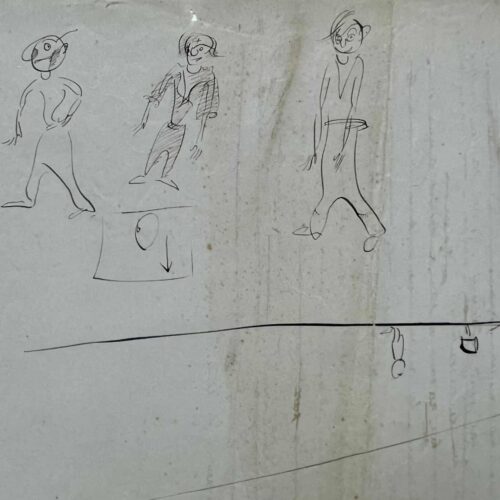
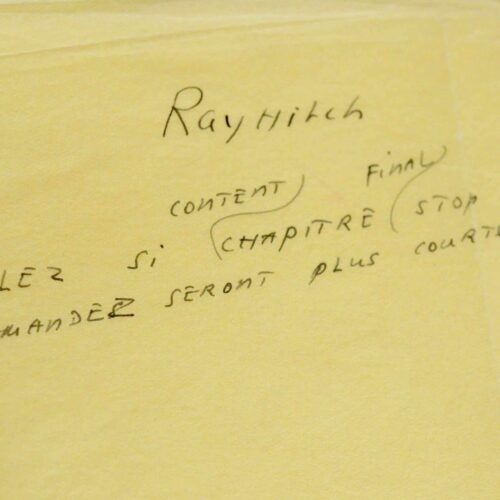
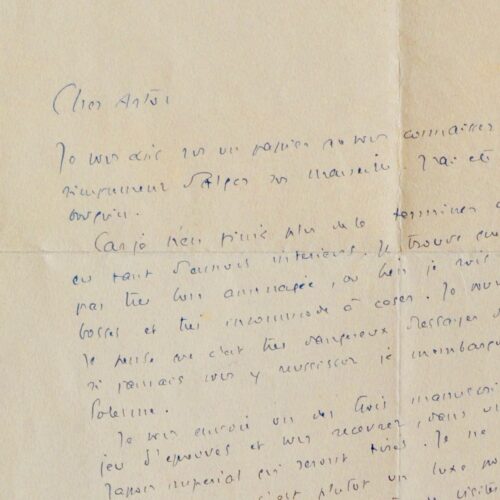
The draft is divided into six chapters, the first very difficult to read, dealing with a transmission method (probably unrelated), with penmanship exercises and the first words of a letter on the back. On the verso of the third page…
Read moreAn important manuscript by Antoine de Saint-Exupéry, written during the war, and which appears to be unpublished: it is a patriotic text intended for "those who are fighting against Germany", in order to encourage them to act quickly, particularly with regard to the children of France.
Draft divided into six chapters, the first very difficult to read, dealing with a transmission method (probably unrelated), with pen tests and the first words of a letter on the back. On the back of the third page, a draft of another text.
According to him, the combatants and leaders bear a very heavy responsibility: "It is a death sentence or a pardon that you must pronounce. The juror of the French tribunal has no right to shirk the duties of his office." This long speech aims to make men responsible to future generations: "This link that binds the chain of French generations depends on you; the lives of the children of France rest on you." They cannot escape their role: "Today you are the jurors of the children of France. You did not want this power? You are invested with it nonetheless." The choice is urgent: "This moment is a question of life or death." To hesitate, to continue to think, to not act immediately is tantamount to leaving deaths behind: "Children are killed while you decide to save them. And when you have resolved your problem by deciding to save the children, the children are unfortunately dead." To do nothing is tantamount to killing: "Thus, if I come across a fire in the forest, I could extinguish it with a kick. But I merely watch it, claiming that I didn't start it and that the forest isn't mine. That's true. But if you condemn me as an arsonist, you'll still be right." Every man is therefore responsible: "Because a man is responsible for the fate of all men insofar as, by the force of circumstances, he finds himself in control of it. That is civilization." He emphasizes that once the war is over, France will need the children of today, and he warns with this very strong statement: "Whether Germany is defeated or not, if France has been depopulated, it will be the Germans who cultivate it." In short, saving children means saving France: "I think we must save in Europe those races who want to can save the balance of this Europe. If you let the children of France die, who will occupy and cultivate the lands of France? There will need to be farmers." Therefore, people today must commit themselves and ensure that those of tomorrow can live. And Saint-Exupéry takes up the image of the illustrious scholars cited in Flight to Arras : "And when you hear the children of France crying for milk, tell yourself that these are the Pasteurs of tomorrow, the Cézannes of tomorrow, the Renoirs of tomorrow, the Bergsons of tomorrow who are crying for milk because they do not yet have another language. And you need them. We all need each other. [...] If I am sitting on the bank of a river and a man is drowning and I can reach out and save him, I am responsible for that man. No one, however, has entrusted this responsibility to me. I have my duties elsewhere. It is even possible that I hate this man. Perhaps I am burdened by being the owner of this life. But that is how it is. Since this life depends on me alone, whether I like it or not, I am responsible for it." Saint-Exupéry concludes by referring men to their conscience; He concluded with these words: "And now you, the jurors, will decide."
Reduce