
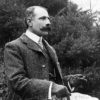
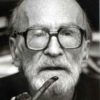
Mircea Eliade
(1907/1986)
Romanian historian of religions, mythologist, philosopher and novelist.

Léonce Elie de Beaumont
(1798/1874)
Geologist, permanent secretary of the Academy of Sciences.
Pauline Elisabeth of Romania
(1843/1916)
Queen of Romania (1881). She wrote under the pseudonym Carmen Silva.
Marie Vincent Talochon Elisée (the father)
(1753/1817)
Physician, chief surgeon to Louis XVIII.

Duke Ellington
(1899/1974)
American jazz pianist and composer. He is considered one of the greatest American jazzmen.

Oliver Ellsworth
(1745/1807)
American revolutionary and politician. He was one of the drafters of the United States Constitution, then a senator from Connecticut and Chief Justice of the United States Supreme Court.
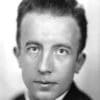
Toussaint-Bernard Emeric-David
(1755/1839)
Art historian, archaeologist and scholar, mayor of Aix during the Revolution, member of the Institute (Inscriptions).
Adolphe Empis (also known as Simonis)
(1795/1868)
Playwright, general administrator of the Comédie-Française, member of the French Academy.
Prosper Enfantin
(1796/1864)
A utopian philanthropist and leader of the Saint-Simonian school, he founded a model community in Ménilmontant with forty disciples.
Arthur Engel
(1855/1920)
As a numismatist, he has published numerous reference works, including, with Raymond Serrure, a Treatise on the Numismatics of the Middle Ages and a Treatise on Modern and Contemporary Numismatics.
Frédéric Engelhardt
(1796/1874)
Director of the Niederbronn forges and later deputy for Bas-Rhin in the Constituent Assembly, he had acquired great popularity among the workers to whom he provided free courses.

Roland Engerand
(1892/1951)
A writer, he is the author of poems, essays and novels. He was an instructor officer at Saint-Cyr-l'Ecole and then settled in Saint-Cyr-sur-Loire until his death.
Victor Ennery (Carpenter, Count of)
(1732/1776)
Governor of Martinique (1765), Governor General of the Windward Islands (1768) then Commander General of the French Leeward Islands (1775), he did much for the prosperity of the Antilles.
Adolphe Ennery (d')
(1811/1899)
A novelist and playwright, he wrote more than two hundred plays or opera libretti and enjoyed great success.
William Ensom
(1796/1832)
Awarded a silver medal by the Society of Arts for a portrait of William Blake, he is known for his very fine engravings and watercolors.

Charles Geneviève Eon de Beaumont (The Knight of Eon)
(1728/1810)
A skilled diplomat, he negotiated the treaty ending the Seven Years' War with the Duke of Nivernais. He maintained the mystery surrounding his female gender from 1769 until his death.
Charles Michel Epée (Abbot of)
(1712/1789)
Philanthropist, pioneer of specialized education for the deaf.
Jacques François Epée (of the)
(1710/1792)
Architect to the king, elder brother of the Abbot of the Sword.
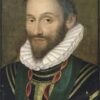
Jean Louis de Nogaret de La Valette Epernon (Duc)
(1554/1642)
Favori d’Henri III, gouverneur de Provence, colonel général de l’infanterie française, il se trouve dans le carrosse d’Henri IV au moment où celui-ci est assassiné.
Charles Ephrussi
(1849/1905)
Historien de l’art, proche des artistes modernes et de Proust, il possède La Gazette des Beaux-Arts et est l’auteur de plusieurs ouvrages sur Dürer.
Louise Tardieu d’Esclavelles Epinay (d’)
(1726/1783)
Elle tient un salon très fréquenté des hommes de lettres, parmi lesquels des encyclopédistes. Protectrice de Rousseau.
Annie Ernaux
(né en 1940)
Femme de lettres française, prix Nobel de littérature en 2022.
Jean Augustin Ernouf
(1753/1827)
Général d’Empire, capitaine général de la Guadeloupe (1803), il capitula en 1810.
Maurice Escande
(1892/1973)
Acteur, metteur en scène, sociétaire (390e), puis doyen et administrateur général
de la Comédie-Française de 1960 à 1970.
François Louis Escherny (d’)
(1733/1815)
Philosophe suisse, ami intime de Jean-Jacques Rousseau et de Diderot.
Raymond Escholier
(1882/1971)
Journaliste, romancier et critique d’art français. Il fut conservateur de la Maison de Victor Hugo et du musée du Petit Palais.
Georges Esparbès (d’)
(1863/1944)
Ecrivain, auteur d’ouvrages sur l’épopée napoléonienne et le Premier Empire ; surnommé le chantre du grognard, il fut l’ami de Léon Bloy, Moréas et Tailhade.
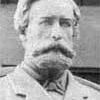
Henri-Jacques Espérandieu
(1829/1874)
Architecte français. Il réalisa notamment la « Bonne Mère », Notre-Dame-de-la-Garde, à Marseille.
Jean Etienne Esquirol
(1772/1840)
Médecin aliéniste, l’un des pères de la psychiatrie.
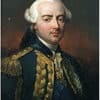
Charles Henri d’Estaing
(1729/1794)
Amiral, il commande la flotte envoyée aux insurgents américains en 1778, échoue par deux fois devant Rhode Island et Savannah et remporte un demi-succès à la Grenade. Il sera guillotiné sous la Terreur.