

Lucien Fabre
(1899/1952)
An engineer and man of letters, he was a close friend of Léon-Paul Fargue and Paul Valéry. A jack-of-all-trades, he published novels and was interested in theology and theatre.
A · B · C · Charlie Hebdo · D · E · F · G · H · Hara-Kiri · I · J · K · L · M · N · O · P · Q · R · S · T · U · V · W · X · Y · Z
An engineer and man of letters, he was a close friend of Léon-Paul Fargue and Paul Valéry. A jack-of-all-trades, he published novels and was interested in theology and theatre.
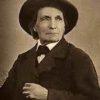
French naturalist and entomologist, author of Souvenirs Entomologiques.
Writer and polemical journalist; close to Doriot and the PPF.
Commander of ships (La Gracieuse, Le Fier, Le Protecteur, Le Sagittaire, among others). He left the service in 1792 and took refuge in Spain.
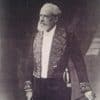
An archivist and paleographer, he founded the Revue historique and became a specialist in the 17th century. He was a member of the Institut (ASMP, 1901) and of the Société historique de Paris.
Emile Faguet was primarily interested in the critique of ideas. He is the author of biographies of Corneille, La Fontaine, Voltaire, and Flaubert.
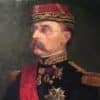
French general, explorer, governor of Senegal and politician.
French politician, baron of the Empire and secretary to Napoleon I.
Painter and illustrator, student of Jules Lefebvre and Benjamin-Constant. He was a caricaturist for Le Figaro, L'Assiette au Beurre and Le Rire.
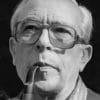
Press cartoonist. He was a political cartoonist at Le Figaro for 45 years, from 1960 to 2005.
A notary's clerk and then a lawyer, Falampin was also one of the founders of L'Illustration, with Paulin, and the businessman and solicitor of George Sand, from 1841 to 1852.

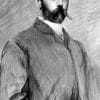
French jeweller. Trained at Mellerio Frères, he supplies other jewellers such as Boucheron.

Bishop of Piacenza (1807), then Archbishop of Bourges (1813).
Historian and Catholic politician, Minister of Public Instruction, member of the French Academy (1858); he reorganized primary and secondary education.
A writer, reader in the House of Orléans, and physics professor to the future Louis-Philippe, he had several comedies performed.
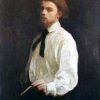
Painter of animated compositions and genre scenes, engraver and illustrator. He painted many paintings of the Salons, music halls, views of Paris and Venice, and crowds in general.
A poet and writer, he celebrates Paris in his prose poems such as "Piéton de Paris" (1939).
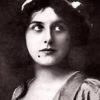
He was noticed by Pierre Loti and Pierre Louÿs and won the Prix Goncourt (1906), unanimously, for Les Civilisés.
Publisher, approached by Zola to publish the letter J'accuse.
Economist and politician, Minister of the Interior and President of the Council under Louis Napoleon Bonaparte.
Diplomat, magistrate and prefect, plenipotentiary minister to the United States during the Revolution.

Geologist and volcanologist, first holder of the chair of Geology at the Museum of Natural History, he supported the beginnings of ballooning by helping the Montgolfier brothers and Pilâtre de Rozier.
President of the Republic (1895/1899), died suddenly at the Elysée Palace from a cerebral hemorrhage, on February 16, 1899.
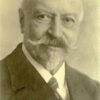
An anarchist, he founded Le Libertaire (1895), then became director of Le Journal du Peuple.
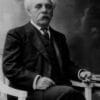
Félibre, friend of Mistral, founder of the Association of Félibres; republican journalist, Minister of Public Instruction and Fine Arts in the second Briand cabinet.
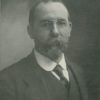
French surgeon, pioneer of modern gynecological surgery. He was the older brother of Élie Faure.
French politician, member of the Montagnard National Convention.
Perform a search by directly entering the author's name, the reference, or the document title.