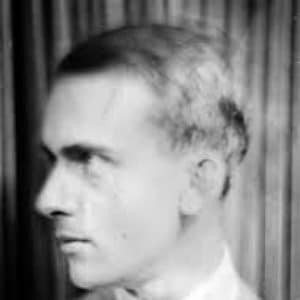

Jacques Babinet
(1794/1872)
Physicist and astronomer, from the Bureau des Longitudes and the Academy of Sciences.
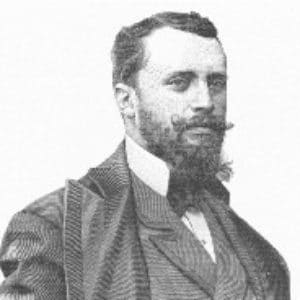
Félix Baciocchi
(1762/1841)
General of the Empire. Prince of Lucca and Piombino and husband of Elisa Bonaparte.
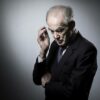
Robert Badinter
(1928/2024)
Lawyer and Minister of Justice under Mitterrand, architect of the abolition of the death penalty, buried in the Pantheon.

Jean Baffier
(1851/1920)
Sculptor, student of Aimé Millet; he also devoted himself to the revival of Berry culture.
Joseph Baggers
(1858/1938)
A percussionist and author of a Timpani Method, he was the first professor of timpani at the Paris Conservatory and the teacher of Olivier Messiaen.
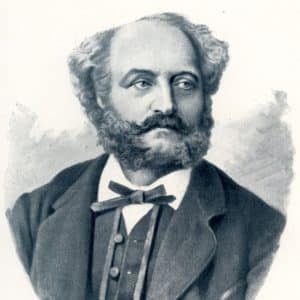
Henri Baillon
(1827/1895)
Botanist, member of the Botanical Society of France (at its creation in 1854) and of the Royal Society, author of important works on botany.
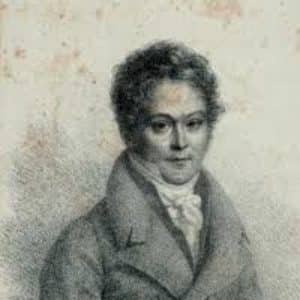
Pierre Baillot
(1771/1842)
Violinist and composer, attached to the Emperor's music, he is the author of a violin method, and of The Art of the Violin.
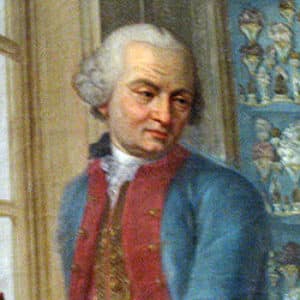
Giovanni de Baillou
(1758/1819)
An Italian geographer, correspondent of the Institute, director of the geography office in Florence, he was in charge of the geographical division of the departments comprising Tuscany during the occupation by Napoleonic troops.
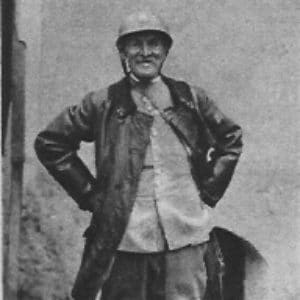
Maurice Camille Bailloud
(1847/1921)
As a general, he led the expeditionary force to Madagascar in 1895, and commanded the expedition to China against the Boxers.
Jean Sylvain Bailly
(1736/1793)
French mathematician, astronomer, writer and politician. He was the first mayor of Paris.
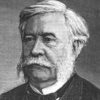
Antoine-Nicolas Bailly
(1810/1892)
French architect. Founding president of the Society of French Artists, which organized the famous Salon of French Artists every year.
Jacques Bainville
(1879/1936)
Monarchist and nationalist journalist and historian, close to Charles Maurras, member of the French Academy.
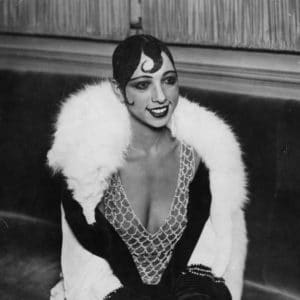
Josephine Baker
(1906/1975)
Singer, dancer and revue leader. She is often considered the first black star and supports the fight against racism, particularly the civil rights movement of Martin Luther King.
Léon Bakst
(1866/1924)
Painter, decorator and costume designer, creator of the sets and costumes for Diaghilev's Ballets Russes (1909-1921).
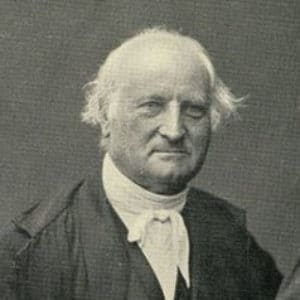
Antoine Jérôme Balard
(1802/1876)
Chemist and pharmacist, discoverer of bromine (1826).
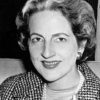
Letitia Baldrige
(1926/2012)
Specialist in etiquette, public relations and "Social Secretary" to Jacqueline Kennedy at the White House.

Pierre Balmain
(1914/1982)
A great couturier, he founded his own fashion house in 1945, which he ran until his death in 1982. He also created numerous costumes for the theatre and cinema.
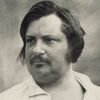
Honoré de Balzac
(1799/1850)
One of the great novelists of the 19th century, author of more than ninety novels and short stories published from 1829 to 1855, collected under the title La Comédie humaine.

Henriette Catherine Balzac d'Entragues (de), Marquise de Verneuil
(1579/1633)
Mistress of Henry IV from 1599 to 1608, with whom she had two children; daughter of Marie Touchet (mistress of Charles IX) and François de Balzac.
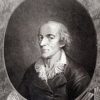
Jean Henri Bancal des Issarts
(1750/1826)
Convention member from the Girondins of Puy-de-Dôme. Sent on a mission to Dumouriez, he was handed over to the enemy and released in exchange for the daughter of Louis XVI.

George Bancroft
(1800/1891)
American historian and politician, founder of the U.S. Naval Academy, he is the author of History of the United States, from the Discovery of the American Continent.
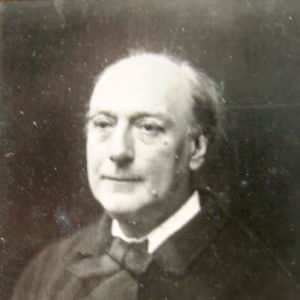
Théodore Banville (of)
(1823/1891)
A poet and friend of Baudelaire, Hugo and Gautier, he discovered the talent of Arthur Rimbaud, whom he hosted for a time.
Germain Bapst
(1853/1921)
Scholar, historian and collector. From a large family of goldsmiths and jewelers originally from Swabia, Germain Bapst published numerous works on art jewelry, including Histoire des joyaux de la couronne, in 1887.
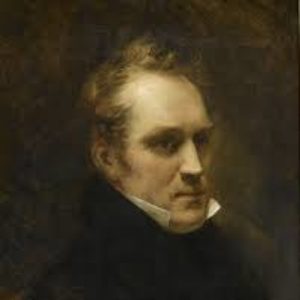
Prosper Brugière Barante (baron of)
(1782/1866)
Politician and historian. Academician (1828).
Nicolas Barat
(died in 1706)
Scholar and Hebraist, collaborator of Father Thomassin for his Glossarium universale hebraïcum.
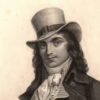
Charles Jean Marie Barbaroux
(1767/1794)
French politician, deputy for Bouches du Rhône, Girondin and secretary of the Commune of Marseille.
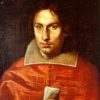
Antonio Barberini
(1607/1671)
Italian cardinal. Nephew of Urban VIII, he was bishop of Poitiers, archbishop of Reims and Grand Almoner of France.
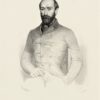
Armand Barbès
(1809/1870)
Républicain farouche, il rejoint plusieurs sociétés prolétariennes (dont la Société des Saisons). Il prend part à deux journées historiques : celle du 12 mai 1839, avec la tentative de renversement de Louis-Philippe puis celle du 15 mai 1848, avec la formation d’un gouvernement insurrectionnel. Amnistié en 1854, il meurt exilé.