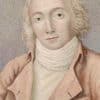


Maurice Curnonsky
(1872/1956)
Gastronome et critique culinaire, il publie de nombreuses chroniques dans la presse parisienne et des romans. Il fonde l’Académie des vins de France et participe à la création du guide Michelin.


Astolphe Custine (de)
(1790/1857)
Voyageur et écrivain, auteur de La Russie en 1839.
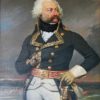
Adam-Philippe de Custine
(1742 /1793 )
Général de division de la Révolution française. Il participa à la guerre de Sept Ans, puis à la guerre d’indépendance américaine et épousa les idées révolutionnaires. Il fut guillotiné pour haute trahison le à Paris. Il est le grand-père d’Astolphe de Custine.
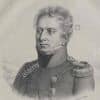

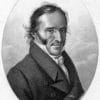
Frédéric Cuvier
(1773/1838)
Anthropologue et zoologiste. Nommé directeur de la Ménagerie du Jardin du Roi, en 1803.

György Cziffra
(1921/1994)
Pianiste virtuose hongrois, naturalisé français, surtout connu pour son interprétation des oeuvres virtuoses de Franz Liszt.
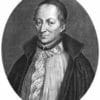
François d'Aix de La Chaize
(1624/1709)
A French Jesuit priest and confessor to King Louis XIV, he was better known as Father de La Chaize and Père Lachaise. The Parisian cemetery created on the site of his residence bears his name.
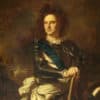
Louis-Auguste d'Albert d'Ailly, Duke of Chaulnes
(1676/1744)
French military officer. He was elevated to the dignity of Marshal of France in 1741.
Marshal of Rochefort
(1626/1676)
French military officer, known as the "Marshal of Rochefort". Marshal of France, general of the King's armies, captain of His Majesty's Bodyguard, governor and lieutenant general of the provinces of Lorraine and Barrois, of Metz, Toul, Verdun and the Metz region, and of the city of Ath in Flanders.
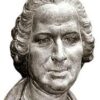
Étienne-Noël d'Amilaville
(1723/1768)
A man of letters and a civil servant, a great friend of Diderot and d'Alembert and especially of Voltaire with whom he acted in concert on the Sirven and Calas affairs.
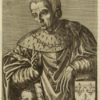
Jean d'Angoulême
(1399/1467)
Count of Angoulême and Périgord, brother of Charles Iof Orléans. Also known as Jean d'Orléans.
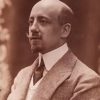

Adolphe d'Archiac
(1802 /1868)
French geologist and paleontologist. He was the founder of prehistoric geology in France with Boucher de Perthes.

Auguste d'Arenberg
(1837/1924)
Monarchist deputy, president of the Suez Canal Company. Member of the Institute (he succeeded the Duke of Aumale at the Academy of Fine Arts)
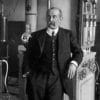
Arsène d'Arsonval
(1851/1940)
French physician, physicist and inventor. He notably invented the galvanometer and the first telephone approved by the PTT (French Post Office).
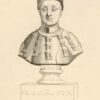
Charles of Artois
(1394/1472)
Count of Eu. He was the son of Philip of Artois, Count of Eu, and Marie of Berry. Captured during the Battle of Agincourt, he regained his freedom in 1438 at the age of 44, and was then appointed lieutenant general for Île-de-France, Brie, the bailiwick of Senlis, and the Duchy of Normandy, as well as governor of Paris.
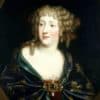
Maria Theresa of Austria
(1638/1683)
Queen of France and Navarre, wife of Louis XIV, daughter of Philip IV, King of Spain.
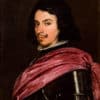
Francis I d'Este
(1610/1658)
Duke of Modena and Reggio. Powerful Italian military leader. Velasquez painted his portrait and Bernini immortalized him in a bust.
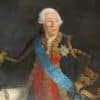
Anne Pierre d'Harcourt
(1701/1783)
French military officer, fourth Marshal of France from the Harcourt family.
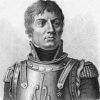
Jean Joseph Ange d'Hautpoul
(1754/1807)
French general of the Revolution and the Empire, he died from wounds received at the Battle of Eylau.


Maurice d'Ocagne
(1862/1938)
French mathematician. Member of the Academy of Sciences (1922). He is credited with nomography, which aims to replace numerical calculations in a completely general way, through graphical representations (abacus and nomograms).
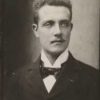
Henry of Orléans
(1867/1901)
French explorer, adventurer and prince. He died at the age of 33 in Saigon, Cochinchina.
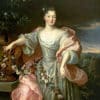
Charlotte-Aglaé of Orléans
(1700/1761)
The daughter of Regent Philippe d'Orléans, she became Duchess of Modena through her marriage to Francesco III d'Este. She was nicknamed "Mademoiselle de Valois".
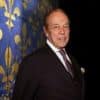
Henry of Orléans
(1933/2019)
Orleanist pretender to the throne of France, from 1999 to 2019.
Jehan d'Uzès
(1430/1475)
Seventh Viscount of Uzès. He married Anne de Brancas, with whom he had one daughter, Symone d'Uzès.
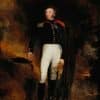
Louis-Antoine of France
(1775/1844)
Duke of Angoulême (1775-1824), then Dauphin of France (1824-1830) and Count of Marnes (1830-1844), son of Charles X and Marie-Thérèse of Savoy.
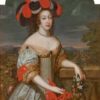
Anne Marie Louise of Orléans
(1627/1693)
Daughter of Gaston d'Orléans and Marie de Bourbon and granddaughter of King Henry IV, she was the first cousin of Louis XIV. She was Duchess of Montpensier, Dauphine of Auvergne, Countess of Eu and Mortain and Princess of Joinville and Dombes.
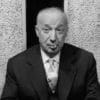
Good Joseph Steel
(1742/1833)
Scholar, historian, perpetual secretary of the Academy of Inscriptions, curator of the National Library, academician (1823).

Hyacinthe Dahirel
(1804/1875)
Representative of the people in Morbihan. He supports a monarchy in favor of the Count of Chambord.

Edouard Daladier
(1884/1970)
Politician. Member of Parliament for Vaucluse (1919), Minister of Colonies (1924), President of the Council (1933), Prime Minister under Albert Lebrun (January and February 1934). Serving several times as Minister of War, he signed the Munich Agreement and the declaration of war against Germany. He was dismissed by Pétain before being deported to Germany, where he remained until 1945.