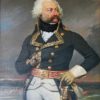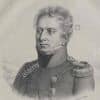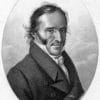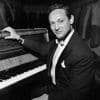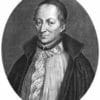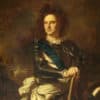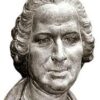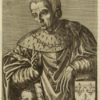
Michel Cubières (chevalier de)

(1752/1820)

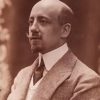
Ecrivain, poète et auteur dramatique prolifique, Michel de Cubières publie de nombreux vers galants et devient secrétaire de la Commune de Paris sous la Révolution ; il fut l’amant de Fanny de Beauharnais.

See the documents

Théophile Cuillier

(né en 1843)

Emeutier de la Commune, il fut arrêté le 22 mai à la barricade de la rue de Rome. Il a été considéré comme l’un des hommes les plus dangereux de la Commune.

See the document
Bernard Cunéo

Bernard Cunéo

(1873/1944)

Chirurgien, membre de l’Ac. de médecine (1933), fondateur du Journal de Chirurgie (1908). Pendant la guerre de 1914, il fut médecin chef de l’hôpital temporaire n°1 de Verdun et opéra notamment Maginot. Il se consacra à la chirurgie orthopédique et réparatrice.

See the document
Paul Cunisset-Carnot

Paul Cunisset-Carnot

(1849/1919)

Haut-magistrat, érudit, archéologue et homme politique, il épouse la fille de Sadi Carnot en 1883. Il est également auteur de livres de chasse.

See the document

Eve Curie

(né en 1904)

Ecrivain, fille de Pierre et Marie Curie, ambassadrice de l’Unicef (son mari, Henry Labuisse fut secrétaire général de l’Unicef durant 15 ans).

See the document
Maurice Curnonsky

Maurice Curnonsky

(1872/1956)

Gastronome et critique culinaire, il publie de nombreuses chroniques dans la presse parisienne et des romans. Il fonde l’Académie des vins de France et participe à la création du guide Michelin.

See the documents

Adam-Philippe de Custine

(1742 /1793 )

Général de division de la Révolution française. Il participa à la guerre de Sept Ans, puis à la guerre d’indépendance américaine et épousa les idées révolutionnaires. Il fut guillotiné pour haute trahison le à Paris. Il est le grand-père d’Astolphe de Custine.

See the document
György Cziffra

György Cziffra

(1921/1994)

Pianiste virtuose hongrois, naturalisé français, surtout connu pour son interprétation des oeuvres virtuoses de Franz Liszt.

See the document

François d'Aix de La Chaize

(1624/1709)

A French Jesuit priest and confessor to King Louis XIV, he was better known as Father de La Chaize and Père Lachaise. The Parisian cemetery created on the site of his residence bears his name.

See the documents

Marshal of Rochefort

(1626/1676)

French military officer, known as the "Marshal of Rochefort". Marshal of France, general of the King's armies, captain of His Majesty's Bodyguard, governor and lieutenant general of the provinces of Lorraine and Barrois, of Metz, Toul, Verdun and the Metz region, and of the city of Ath in Flanders.

See the document

Étienne-Noël d'Amilaville

(1723/1768)

A man of letters and a civil servant, a great friend of Diderot and d'Alembert and especially of Voltaire with whom he acted in concert on the Sirven and Calas affairs.

See the document

Auguste d'Arenberg

(1837/1924)

Monarchist deputy, president of the Suez Canal Company. Member of the Institute (he succeeded the Duke of Aumale at the Academy of Fine Arts)

See the documents

Arsène d'Arsonval

(1851/1940)

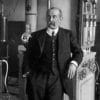
French physician, physicist and inventor. He notably invented the galvanometer and the first telephone approved by the PTT (French Post Office).


See the document

Charles of Artois

(1394/1472)

Count of Eu. He was the son of Philip of Artois, Count of Eu, and Marie of Berry. Captured during the Battle of Agincourt, he regained his freedom in 1438 at the age of 44, and was then appointed lieutenant general for Île-de-France, Brie, the bailiwick of Senlis, and the Duchy of Normandy, as well as governor of Paris.

See the document

Marie-Louise of Austria

(1791/1847)

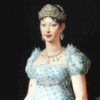
Marie-Louise of Habsburg-Lorraine or Marie-Louise of Austria, Archduchess of Austria, Princess of Hungary and Bohemia, was Empress of the French from 1810 to 1814, then Duchess of Parma, Piacenza and Guastalla until 1847.

The eldest daughter of Emperor Francis Iof Austria, she was given Iin marriage in 1810 to the Emperor of the French and King of Italy Napoleon to seal the Treaty of Schönbrunn between France and Austria, after the latter's defeat at the Battle of Wagram in 1809.


See the document

Marie-Antoinette d’Autriche

(1755/1793)

Marie-Antoinette d’Autriche ou Marie-Antoinette de Habsbourg-Lorraine, archiduchesse d’Autriche, princesse impériale, princesse royale de Hongrie et de Bohême, fut la dernière reine de France et de Navarre de 1774 à 1792.

Fille de l’empereur François Ier et de Marie-Thérèse d’Autriche, reine de Hongrie et de Bohême, elle épousa, le  Louis XVI, alors dauphin de France, puis roi de France et de Navarre. Elle sera guillotinée en 1793, sur la place de la Révolution à Paris.

See the document

Francis I d'Este

(1610/1658)

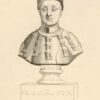
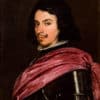
Duke of Modena and Reggio. Powerful Italian military leader. Velasquez painted his portrait and Bernini immortalized him in a bust.

See the document

Maurice d'Ocagne

(1862/1938)

French mathematician. Member of the Academy of Sciences (1922). He is credited with nomography, which aims to replace numerical calculations in a completely general way, through graphical representations (abacus and nomograms).

See the documents

Charlotte-Aglaé of Orléans

(1700/1761)

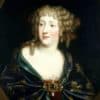
The daughter of Regent Philippe d'Orléans, she became Duchess of Modena through her marriage to Francesco III d'Este. She was nicknamed "Mademoiselle de Valois".

See the document