

Jean de Dunois
(1403/1468 )
Known as "the bastard of Orléans", military leader during the Hundred Years' War and companion-in-arms of Joan of Arc during the lifting of the siege of Orléans (1429). Natural son of Louis Iof Orléans.
A · B · C · Charlie Hebdo · D · E · F · G · H · Hara-Kiri · I · J · K · L · M · N · O · P · Q · R · S · T · U · V · W · X · Y · Z
Known as "the bastard of Orléans", military leader during the Hundred Years' War and companion-in-arms of Joan of Arc during the lifting of the siege of Orléans (1429). Natural son of Louis Iof Orléans.

Seventh Viscount of Uzès. He married Anne de Brancas, with whom he had one daughter, Symone d'Uzès.

Duke of Angoulême (1775-1824), then Dauphin of France (1824-1830) and Count of Marnes (1830-1844), son of Charles X and Marie-Thérèse of Savoy.

Prince of the House of Bourbon. He was the son of Charles-Philippe of France, Count of Artois (later Charles X) and Marie-Thérèse of Savoy. He died assassinated.

Daughter of Gaston d'Orléans and Marie de Bourbon and granddaughter of King Henry IV, she was the first cousin of Louis XIV. She was Duchess of Montpensier, Dauphine of Auvergne, Countess of Eu and Mortain and Princess of Joinville and Dombes.
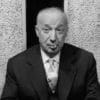
Scholar, historian, perpetual secretary of the Academy of Inscriptions, curator of the National Library, academician (1823).

Representative of the people in Morbihan. He supports a monarchy in favor of the Count of Chambord.

Politician. Member of Parliament for Vaucluse (1919), Minister of Colonies (1924), President of the Council (1933), Prime Minister under Albert Lebrun (January and February 1934). Serving several times as Minister of War, he signed the Munich Agreement and the declaration of war against Germany. He was dismissed by Pétain before being deported to Germany, where he remained until 1945.
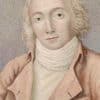
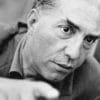
Geologist, professor of applied geology at the Faculty of Sciences of the University of Algiers, president of the Institute of Saharan Research. Member of Parliament for Algiers (1946).
Journalist, owner and director of Le Moniteur universel, organ of the politics of the Second Empire.
A sculptor and student of Carpeaux, he also drew inspiration from the graceful masters of the 18th century. Among other works, he created the monuments of Eugène Delacroix in the Luxembourg Gardens and the Triumph of the Republic in the Place de la Nation.
Painter and engraver; he lived in Russia until 1805 and brought back drawings which he used for the publication of several works.
Brillant officier de cavalerie de Louis XIV, lieutenant général de ses armées, il se distingua à Garpi (1702), à Asti (1705) et a été fait prisonnier à Oudenarde (1708) ; il était en outre sous-lieutenant des mousquetaires.
Chancelier de France en 1814, président de la chambre des Pairs et Garde des Sceaux à la Restauration.
Femme sculpteur anglaise, elle réalise de nombreux bustes de membres de l’aristocratie anglaise du XVIIIe et du début du XIXe.
Homme politique russe, leader des Mencheviks, mort en exil aux Etats-Unis.
Prince de Danemark et d’Islande, fils du prince Axel, attaché militaire à Londres puis à Paris.
Prince de Danemark, fils du roi Charistian IX, frère des rois Frédéric VIII du Danemark et Georges Ier de Grèce.
Compositeur et organiste, membre de l’Académie des Beaux-arts.
Ecrivain et humoriste, lauréat du prix Interlallié (1947, Les Carnets du bon Dieu).
Historien barisien, président de la Société des Lettres, Sciences et Arts de Bar-le-Duc ; il était aussi pasteur de cette ville.
Sculpteur spécialisé dans la caricature.
Peintre, illustrateur, graveur et éditeur d’art de Montmartre.
Historien, archiviste-paléographe, auteur d’une Histoire de France en 8 volumes.
Historien et romancier, il s’est notamment intéressé à l’Histoire de l’Empire britannique et à ses personnages les plus marquants (Jane Grey, Marie Stuart ou Cromwell).

Il collabore au Charivari, revue satirique pour laquelle il réalise de nombreuses lithographies et illustrations.
A sailor and hydrographic engineer, he took part in Vaillant's circumnavigation voyage on the Bonite in 1836-1837, and wrote the 4 volumes of physical observations.
A prima ballerina (1940), she directed the Paris Opera ballet (1957).
Après le 18 brumaire, il s’attache à la fortune de Napoléon et devient membre du Tribunat, intendant général de la Grande Armée, ministre et secrétaire d’Etat (1811). Membre de l’Académie française (1806).
Perform a search by directly entering the author's name, the reference, or the document title.